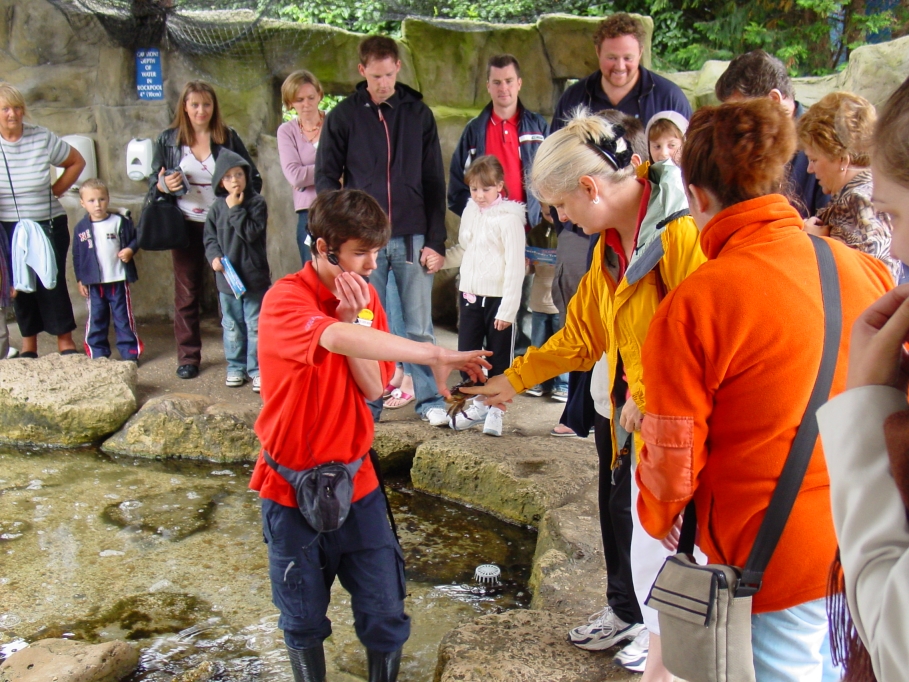
I have always been a bit obsessed with the natural world and the outdoors. Much of my childhood was spent in the woods next to our home or in rockpools in Dorset. At age 14, and I began volunteering for Surrey Wildlife Trust and the RSPB. My first paid job was during the post GCSE summer at Weymouth Sealife Park giving presentations on the various exhibits.
 School finished and gap year underway, I worked in an independent high-end outdoor retailer, spending half my wages on outdoor gear. Then April arrived and my first expedition was underway – 3 months in Madagascar. It was here that I first developed my interest in dragonflies and realised a career in conservation was what I wanted.
Months later I was sitting in university lectures surrounded by people who understood and valued the living world in the same way as myself; make the most of these opportunities. Two years later I’m lucky enough to be in the Peruvian Amazon collecting data on dragonflies for my undergraduate thesis.
 It’s 2012 and with a degree under my belt I led the science program on two expeditions to Oman with a goal, amongst others, of finding and camera trapping the critically endangered Arabian Leopard. I enjoyed the best of the 2012 British summer working for Thomson Ecology, an ecological consultancy firm based in my home town in Guildford.
 In 2013 I embarked on my third visit to Oman, following a two week reccy the previous Autumn. I designed and coordinated the field research to rapidly assess the biodiversity within Wadi Sayq; a coastal valley 20km in length. The expedition successfully captured footage of the Arabian leopard, recorded rare and endemic reptile species, and informed and inspired on a community outreach programme. I wrote up the expedition reports while working for Thomson Ecology on the Wallasea Island Wild Coast Project. In August 2013 I accompanied my good friend James Borrell in Finland where we collected samples of Dwarf Birch (Betula nana). A comparison is to be made between the genetic health of the fragmented populations in Scotland and the continuous populations in Finland. We were situated at Kevo Sub-arctic Research Facility amongst Lapland’s stunning wilderness environments.

In September 2013 I moved to Cornwall to study MSc Conservation Science & Policy at the University of Exeter, Penryn Campus, to supplement my ecological knowledge with conservation policy and qualitative research techniques. In January, we undertook a two week field course in Kenya, where we visited a range of conservation policy case studies, on themes such as poaching, sustainable water-use, agriculture and tourism. My dissertation research, took place again in Oman, but rather than focusing on ecology, I took the plunge and worked with local pastoralists. Using participatory appraisal methods I managed to gain an insight into the problem of overgrazing from a human perspective and indeed this research led me to be successful in securing a UK research council PhD scholarship to continue this research back at DICE, University of Kent.
I completed my PhD between September 2015 and November 2018, with a 14 month fieldwork period in Oman. Broadly, my research aimed to understand the social drivers and ecological impacts of overstocking by rural pastoralists in Jabal Qamar, the westernmost mountain range in Dhofar.
In February 2019, after a relaxing Christmas with friends and family, I moved to Columbus in Ohio, USA. Here, I joined the ASOM project as a post-doctoral researcher. This highly collaborative research aims to improve our understanding of how the environment influences human territorial behavior in pastoral ecosystems as well as how territoriality in turn shapes the environment.
Since 2021 I have worked as Monitoring and Evidence Manager at Kent Wildlife Trust, supporting high profile conservation projects such as Pine Marten and European Bison reintroduction programmes. I have received intensive training in Conservation Standards, obtained a GVC drone pilot qualification, and worked on the Wilder Carbon voluntary carbon standard – a mechanism for locking up additional carbon through restoration of native habitat via reinstatement of natural processes.
In 2025, I took up an additional post as Co-founder at the Dhofar Centre for Wildlife Research in Oman.
 Lawrence Ball │ Conservation Science